/ Contact Us
Zhejiang Gechi Electric Co., Ltd.
Xinguang Industrial Zone, Liushi Town, Yueqing, Wenzhou, Zhejiang, China.
+86-0577-62620730
/ Contact Us
Zhejiang Gechi Electric Co., Ltd.
Xinguang Industrial Zone, Liushi Town, Yueqing, Wenzhou, Zhejiang, China.
+86-0577-62620730



2026-06-12
As global industries continue to expand toward automation, smart manufacturing, and high-density infrastructure systems, the demand for safe and efficient power distribution solutions is increasing rapidly. From factories and data centers to commercial buildings and energy facilities, engineers are focusing on improving electrical reliability, reducing installation complexity, and enhancing long-term operational safety. In this context, Electrical Distribution Cabinets have become a key focus for procurement teams and system designers who are searching for stable, scalable, and well-organized power control solutions.
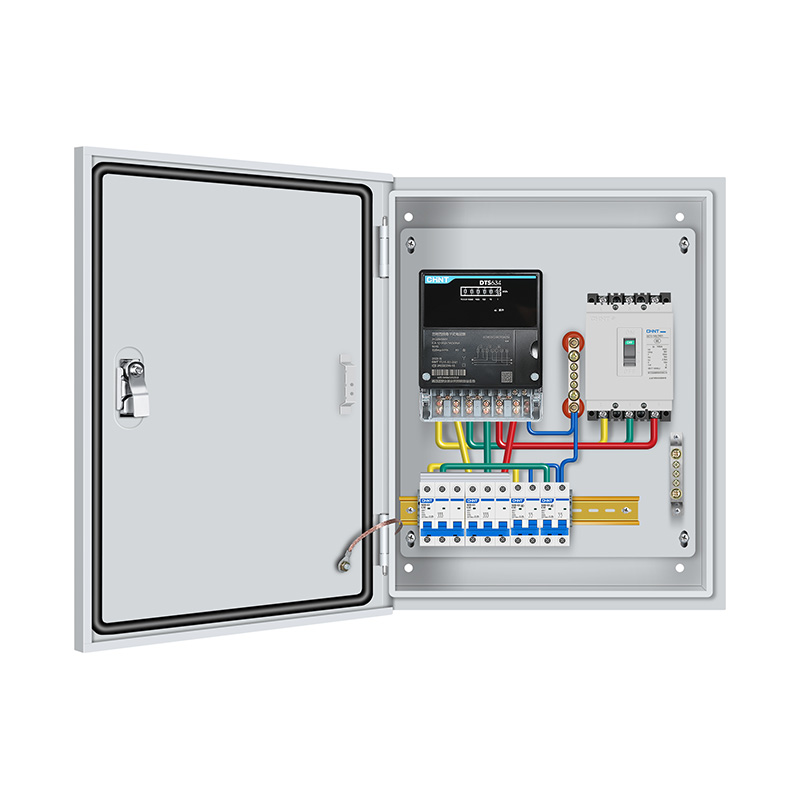
Recent industry search trends show growing attention toward modular electrical systems, improved cable routing structures, thermal management design, and easier maintenance access in industrial environments.
Modern electrical systems are becoming more complex due to increased automation, higher energy demand, and integrated digital control systems. Poor organization can lead to inefficiency and safety risks.
Key challenges include:
Proper distribution design improves both safety and operational efficiency.
Heat accumulation inside electrical systems is one of the most common causes of component failure. As power density increases, thermal design has become essential.
Key improvements include:
Better thermal control extends system lifespan and stability.
Modern industrial projects require flexible and scalable electrical infrastructure that can adapt to changing system demands.
Key advantages of modular systems:
Modular architecture supports long-term infrastructure flexibility.
Efficient cable routing inside distribution systems directly impacts safety, maintenance speed, and system clarity. Poor cable organization can increase risk and troubleshooting difficulty.
Key considerations include:
Well-managed cabling improves operational reliability and safety.
Electrical cabinets are often installed in environments exposed to dust, humidity, vibration, or industrial chemicals, making protection standards critical.
Manufacturers are focusing on:
Durability ensures stable long-term operation under demanding conditions.
As a manufacturer in electrical distribution systems, we observe increasing demand for integrated solutions that combine safety, efficiency, and ease of maintenance. Buyers are now evaluating systems based on lifecycle performance rather than just initial specifications.
Common OEM requirements include:
This reflects the growing complexity of modern electrical infrastructure projects.
As industrial automation, smart buildings, and energy systems continue to evolve, electrical infrastructure design is becoming more critical than ever. Efficiency, safety, and scalability now define purchasing decisions across global markets.
In this evolving environment, sourcing from a reliable Cable Distribution Cabinets supplier helps ensure stable power management, improved installation efficiency, and long-term operational safety in modern electrical systems.
HOT PRODUCTS
interested?
Contact us!
Xinguang Industrial Zone, Liushi Town, Yueqing, Wenzhou, Zhejiang, China.
+86-0577-62620730
 English
 русский
 عربى
عربى
 Türk
Türk
 ไทย
ไทย