/ Contact Us
Zhejiang Gechi Electric Co., Ltd.
Xinguang Industrial Zone, Liushi Town, Yueqing, Wenzhou, Zhejiang, China.
+86-0577-62620730
/ Contact Us
Zhejiang Gechi Electric Co., Ltd.
Xinguang Industrial Zone, Liushi Town, Yueqing, Wenzhou, Zhejiang, China.
+86-0577-62620730



2026-06-26
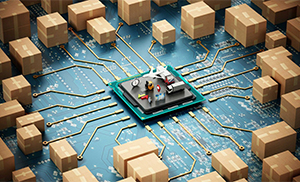
As global industries move deeper into automation, electrification, and digital control systems, the demand for more reliable and intelligently designed electrical infrastructure is increasing. Modern factories, commercial complexes, and energy facilities are no longer relying on simple power distribution—they require integrated systems that support safety, monitoring, and long-term operational stability. In this context, Electrical Distribution Cabinets are becoming a key focus for engineers and procurement teams who are searching for structured, scalable, and maintenance-friendly electrical control solutions.
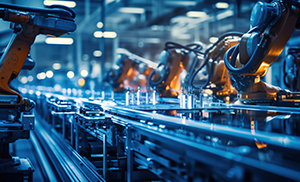
Recent industry search trends show growing attention to system integration, compact design layouts, improved heat control, and simplified maintenance access for complex electrical environments.
Modern electrical infrastructure is no longer isolated—it must work seamlessly with automation systems, sensors, and digital monitoring platforms. This increases the need for integrated design approaches.
Key drivers include:
Integrated systems improve coordination and reduce operational complexity.
The internal arrangement of components inside electrical systems directly affects safety, heat distribution, and maintenance efficiency.
Key improvements include:
Better layout design enhances both performance and serviceability.
As electrical loads increase, heat accumulation becomes one of the main risks affecting system stability and component lifespan.
Key thermal strategies include:
Effective thermal management ensures long-term operational stability.
Industrial operators are increasingly focused on reducing downtime and simplifying maintenance procedures in electrical systems.
Key design considerations include:
Efficient maintenance design directly lowers operational costs.
Electrical systems often operate in harsh environments where dust, vibration, humidity, and temperature fluctuations are common challenges.
Manufacturers are improving:
Durability ensures consistent performance under demanding conditions.
As a manufacturer of electrical control systems, we observe a strong shift toward intelligent, modular, and highly reliable infrastructure solutions. Buyers are prioritizing system performance and lifecycle efficiency over simple component pricing.
Common OEM expectations include:
This reflects the increasing technical sophistication of global electrical procurement.
As industries continue to evolve toward automation and smart energy management, electrical infrastructure is becoming a core part of system intelligence and operational safety. Efficiency, integration, and reliability now define how modern power systems are designed and deployed.
In this evolving environment, sourcing from a reliable Cable Distribution Cabinets supplier helps ensure stable electrical performance, improved system organization, and long-term operational safety in modern industrial applications.
HOT PRODUCTS
interested?
Contact us!
Xinguang Industrial Zone, Liushi Town, Yueqing, Wenzhou, Zhejiang, China.
+86-0577-62620730
 English
 русский
 عربى
عربى
 Türk
Türk
 ไทย
ไทย