/ Contact Us
Zhejiang Gechi Electric Co., Ltd.
Xinguang Industrial Zone, Liushi Town, Yueqing, Wenzhou, Zhejiang, China.
+86-0577-62620730
/ Contact Us
Zhejiang Gechi Electric Co., Ltd.
Xinguang Industrial Zone, Liushi Town, Yueqing, Wenzhou, Zhejiang, China.
+86-0577-62620730





2025-12-12
Seasonal changes often reshape how facilities use electricity, from increased heating demand in winter to additional cooling equipment in summer. A Distribution Box Set combined with well-structured Electrical Distribution Cabinets provides a way to organize circuits, manage load variations, and adjust protection settings as operating conditions shift throughout the year. Understanding how these systems support seasonal load stability helps technicians plan for predictable performance in environments where demand fluctuates significantly.
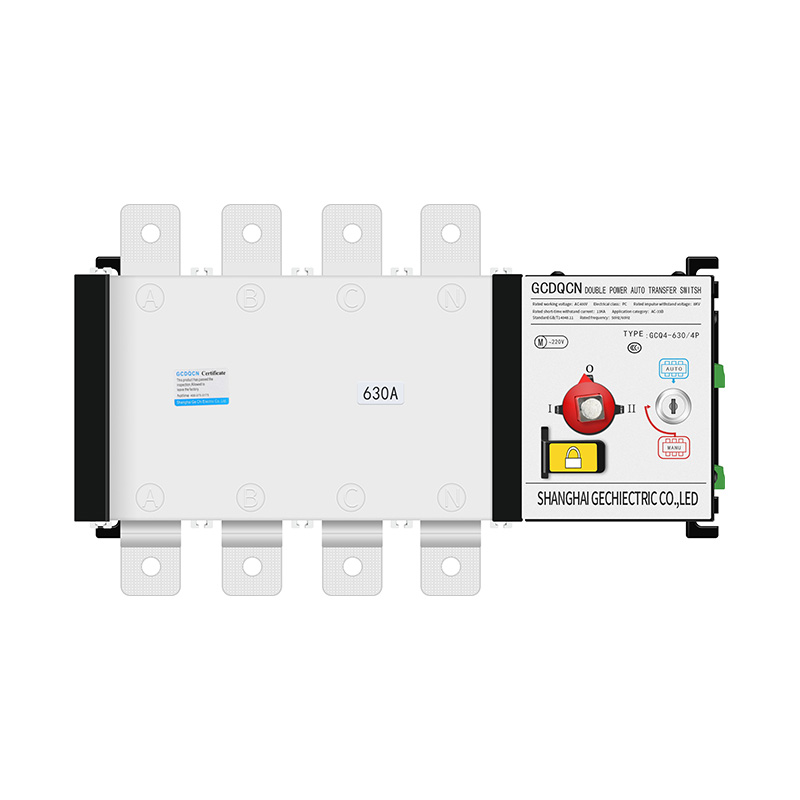
As power demand rises or falls with seasonal equipment use, circuit organization becomes essential. A distribution box set brings circuit breakers, busbars, terminals, and switching devices together within a single enclosure. This arrangement helps users distribute loads across multiple circuits more easily, avoiding situations where seasonal equipment clusters on one side of the panel.
By grouping circuits with clear identification, technicians can assign heating, cooling, lighting, and auxiliary equipment to appropriate sections. When seasonal appliances are switched on or off, the cabinet’s structured layout allows quick review of which circuits may need adjustment. This reduces the need for temporary wiring or improvised solutions that often cause uneven power distribution.
Seasonal load management sometimes requires adding new protective devices or adjusting the placement of existing ones. Cabinets equipped with adjustable mounting plates give installers room to reorganize the component layout without replacing the enclosure. A movable 2.5 mm plate, like the one used in many JXF-type cabinets, supports depth adjustments so that larger seasonal control units or upgraded breakers can be positioned comfortably inside the enclosure.
Because winter heating or summer cooling loads may require different rating devices, this flexibility enables technicians to reconfigure breaker combinations, install supplementary control modules, or route new cables. The internal customization helps facilities stay prepared for seasonal shifts without modifying the external footprint.
Seasonal upgrades often involve new equipment such as heat pumps, temporary boilers, dehumidifiers, irrigation pumps, or rooftop ventilation units. These additions require extra wiring routes. Cabinets with modular cable entry plates allow installers to open or rearrange entry points to direct new circuits through the enclosure.
Removable lower wiring plates and multiple configurable openings give technicians control over cable pathways. Instead of forcing all seasonal circuits through a single entry hole—often causing crowding and unclear routing—these systems create a more organized cable arrangement. During peak seasons, this structure helps visually separate temporary or seasonal circuits from permanent ones, improving traceability.
Changes in temperature and humidity influence electrical equipment behavior. Motors draw higher currents in cold conditions, HVAC units operate longer in hot conditions, and auxiliary systems switch on more frequently. These variations increase the need for accurate overcurrent and fault protection.
A distribution box set that integrates MCCBs, MCBs, RCDs, and SPDs allows technicians to choose suitable protection configurations for seasonal conditions. For example:
Larger HVAC units may require breakers with adjusted trip settings.
Seasonal outdoor equipment may benefit from additional residual current protection.
Surge protection may need attention during thunderstorms common in certain climates.
Having these devices housed within a single organized enclosure ensures technicians can make seasonal checks and adjustments without searching across multiple disconnected panels.
Seasonal power management involves periodic inspections, component replacements, and wiring upgrades. A cabinet with an optional detachable base helps simplify these tasks. Technicians can remove the enclosure without shifting heavy equipment around the room, which helps reduce workspace strain during peak maintenance seasons.
This feature also allows quick access to wiring routes and grounding locations. In periods when power demand increases sharply—such as the start of summer cooling or winter heating seasons—maintenance windows are often short. A detachable base helps streamline work and reduce room disruptions while preparing the system for higher seasonal load.
Temperature changes often influence humidity, condensation, and dust accumulation. Cabinets exposed to outdoor or semi-outdoor conditions experience these variations more dramatically. Multi-stage surface treatments—such as phosphating, electrophoretic priming, and weather-resistant powder coating—help enclosures stay stable in humid summers or cold winters without requiring additional external protective boxes.
HOT PRODUCTS
interested?
Contact us!
Xinguang Industrial Zone, Liushi Town, Yueqing, Wenzhou, Zhejiang, China.
+86-0577-62620730
 English
 русский
 عربى
عربى
 Türk
Türk
 ไทย
ไทย