/ Contact Us
Zhejiang Gechi Electric Co., Ltd.
Xinguang Industrial Zone, Liushi Town, Yueqing, Wenzhou, Zhejiang, China.
+86-0577-62620730
/ Contact Us
Zhejiang Gechi Electric Co., Ltd.
Xinguang Industrial Zone, Liushi Town, Yueqing, Wenzhou, Zhejiang, China.
+86-0577-62620730





2026-04-03
Maintenance challenges in pumping systems often arise not from major equipment failure, but from repeated electrical stress, uncontrolled restarts, and unnoticed operating abnormalities. A Water Pump Control Panel, especially when coordinated with a Dual Power Automatic Transfer Switch, introduces structured supervision and controlled power management that helps reduce long-term maintenance risks. Instead of relying on manual observation or basic motor starters, this integrated approach provides layered protection, controlled switching, and clear operational feedback that supports stable system upkeep.

Pump maintenance issues frequently originate from conditions that develop gradually. Voltage fluctuations, phase imbalance, dry running, repeated high inrush current, and sudden shutdowns can all accelerate wear on motors and mechanical components. In facilities where pumps operate continuously—such as water supply systems, irrigation networks, HVAC circulation loops, or industrial processes—small electrical irregularities may go unnoticed until they develop into mechanical damage.
Uncontrolled restart after a power outage is another common factor. When supply returns abruptly, motors may start simultaneously without sequencing, drawing high current and stressing both electrical and hydraulic components. Over time, such patterns increase the likelihood of overheating, bearing wear, insulation degradation, and contactor fatigue. Reducing these stress cycles requires structured monitoring and coordinated response rather than reactive repair.
A Water Pump Control Panel provides centralized supervision of pump operation. Instead of direct-on-line starting without monitoring, the panel incorporates protection relays, sensors, and programmable logic that continuously evaluate motor conditions. Current levels, voltage consistency, and phase sequence are checked before and during operation. If abnormal readings occur, the system can shut down the pump before damage escalates.
This active supervision reduces exposure to prolonged overload or under-voltage operation. For example, if water level drops and the pump begins running dry, a level sensor or current monitoring function can stop the motor automatically. Preventing extended dry operation avoids overheating and mechanical strain, which are common maintenance triggers. By identifying irregularities early, the control panel limits cumulative damage that would otherwise require corrective service.
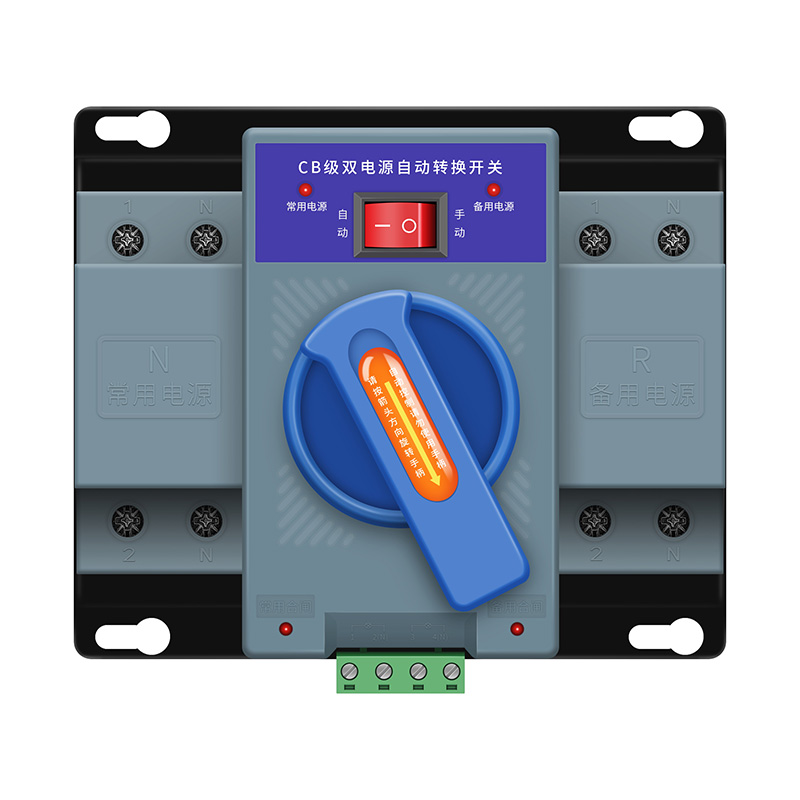
Electrical instability directly affects motor performance. A Dual Power Automatic Transfer Switch contributes to maintenance risk reduction by managing source transitions carefully. When primary power becomes unstable, the switch isolates it and engages a backup source based on preset delay parameters. This prevents motors from operating under fluctuating voltage conditions that could increase winding temperature or reduce torque consistency.
Equally important is the controlled reconnection process. The transfer mechanism ensures that switching does not occur repeatedly during short-term grid fluctuations. By avoiding frequent transitions, mechanical wear on switching contacts and stress on connected motors are reduced. Coordinated communication between the transfer switch and the Water Pump Control Panel ensures that pumps restart only after voltage stabilization is verified, reducing unnecessary strain during recovery periods.
Certain protective features within a Water Pump Control Panel directly address common maintenance risks. These include:
Automatic alternation is particularly relevant in multi-pump systems. Instead of allowing one pump to accumulate excessive running hours while another remains idle, the panel distributes operational time evenly. Balanced usage reduces uneven wear and extends service intervals across the system.
Each protective function acts as a preventive barrier, stopping operation under harmful conditions before physical damage develops.
Manual switching and unsupervised intervention can introduce additional risks during servicing. A structured system reduces dependency on operator judgment under pressure. When maintenance is required, the Dual Power Automatic Transfer Switch allows controlled isolation of the primary source while maintaining safe separation between power inputs. Electrical interlocking prevents simultaneous connection of both sources, reducing the chance of accidental backfeed.
The Water Pump Control Panel also supports safer servicing by providing clear status indicators and fault codes. Technicians can identify the root cause of a shutdown—such as overload or low water level—without extensive manual troubleshooting. Clear diagnostic information shortens downtime and avoids repeated trial-and-error restarts that may worsen equipment stress.
Modern pump control systems often include digital displays or communication modules that record operational data. Running hours, fault history, and current consumption trends provide useful insight into equipment condition. Rather than relying solely on fixed maintenance intervals, facility managers can adjust service schedules based on observed patterns.
For example, if recorded current levels gradually increase over time, this may indicate developing mechanical resistance or bearing wear. Early detection allows planned inspection before a critical failure occurs. When combined with switching event logs from the transfer device, operators can evaluate whether frequent grid disturbances are contributing to wear patterns. This data-driven approach supports structured maintenance planning instead of reactive repair.
HOT PRODUCTS
interested?
Contact us!
Xinguang Industrial Zone, Liushi Town, Yueqing, Wenzhou, Zhejiang, China.
+86-0577-62620730
 English
 русский
 عربى
عربى
 Türk
Türk
 ไทย
ไทย