/ Contact Us
Zhejiang Gechi Electric Co., Ltd.
Xinguang Industrial Zone, Liushi Town, Yueqing, Wenzhou, Zhejiang, China.
+86-0577-62620730
/ Contact Us
Zhejiang Gechi Electric Co., Ltd.
Xinguang Industrial Zone, Liushi Town, Yueqing, Wenzhou, Zhejiang, China.
+86-0577-62620730





2025-11-07
Efficient power management is a critical concern for industrial facilities, where uninterrupted energy flow and controlled distribution directly influence productivity, equipment lifespan, and overall operational stability. A Distribution Cabinet Set or Distribution Cabinet serves as a central hub for organizing electrical systems, offering a structured solution to manage power across multiple circuits while ensuring safety, reliability, and accessibility.
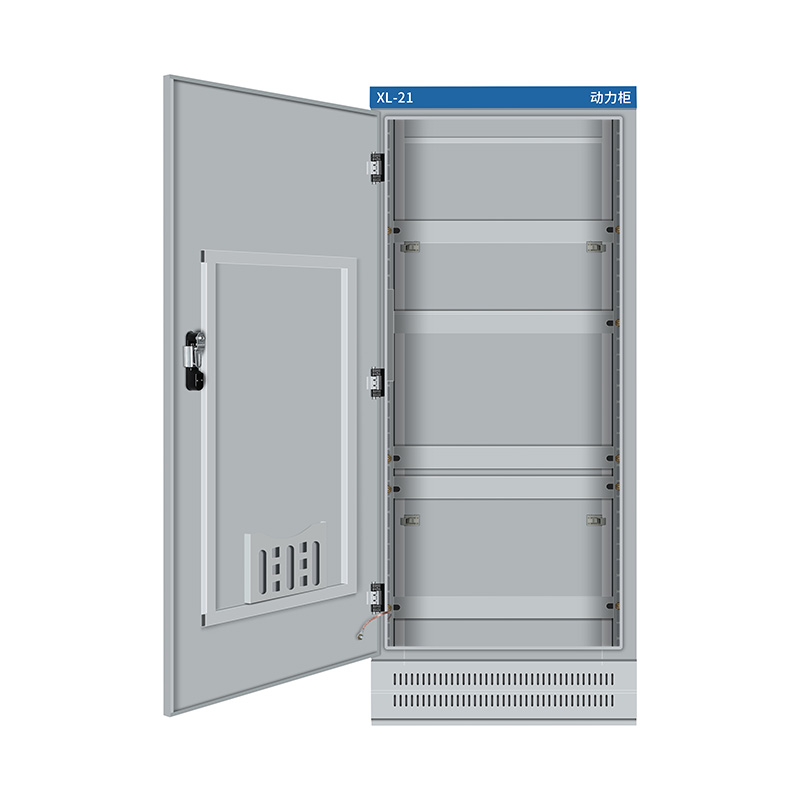
A distribution cabinet provides a centralized platform for integrating circuit protection devices, switching units, and busbars within a single enclosure. By consolidating these components, industrial operators can streamline wiring layouts, reduce clutter, and maintain a clear overview of the electrical network. This structured arrangement makes it easier to trace power paths, identify inefficiencies, and carry out targeted adjustments. In facilities with multiple machinery lines or production zones, this clarity can reduce the time and effort required for troubleshooting, which indirectly supports energy conservation by maintaining consistent operational flow.
Industrial environments require safeguards against overloads, short circuits, and other electrical faults. Distribution cabinets include essential devices such as molded case circuit breakers (MCCBs), miniature circuit breakers (MCBs), residual current devices (RCDs), and surge protective devices (SPDs). Stable power delivery enabled by these protective measures helps avoid energy losses associated with repeated startups, equipment inefficiency, or production interruptions.
Modern distribution cabinets often feature modular configurations, allowing adjustments to meet evolving load demands or accommodate expansions. This flexibility ensures circuits receive the appropriate level of power without unnecessary consumption. Some cabinets are equipped with smart monitoring modules that track real-time energy usage for each circuit. By analyzing this data, facility managers can identify underutilized circuits, redistribute loads, and schedule maintenance more effectively, all of which support a more balanced and efficient energy system.
Power distribution equipment operates under a variety of environmental conditions. Cabinets designed for industrial use accommodate temperature ranges, humidity variations, and installation at different altitudes. Robust structural design using welded angle steel and precision-bent plates provides stability under vibration or mechanical stress. Secure installation and resistance to corrosive elements help maintain performance consistency, ensuring that electrical components function without interruptions that might otherwise increase energy waste.
Distribution cabinets are designed with accessibility in mind. Clear labeling, organized busbars, and accessible breaker panels allow maintenance staff to inspect, test, and replace components without extensive downtime. Routine checks prevent minor issues, such as loose connections or worn-out breakers, from escalating into problems that consume excess power or interrupt operations. User interface components, such as status indicators and control switches, provide operators with immediate feedback on circuit conditions, helping maintain stable power flow across the facility.
Distribution cabinets are commonly used in industrial plants, mining operations, commercial buildings, and utility facilities. In each scenario, they serve a dual purpose: organizing complex electrical networks and providing protective functions that preserve the lifespan of connected equipment. When integrated with energy monitoring or remote control systems, these cabinets allow operators to respond quickly to load changes, track consumption patterns, and make operational adjustments that support both energy efficiency and cost management.
By combining structured distribution, protective measures, modular adaptability, and operational stability, a Distribution Cabinet Set or Distribution Cabinet becomes more than just a container for electrical components. It functions as a practical tool for managing industrial power, improving operational clarity, and supporting a more consistent, controlled, and efficient use of electricity across complex facilities.
HOT PRODUCTS
interested?
Contact us!
Xinguang Industrial Zone, Liushi Town, Yueqing, Wenzhou, Zhejiang, China.
+86-0577-62620730
 English
 русский
 عربى
عربى
 Türk
Türk
 ไทย
ไทย