/ Contact Us
Zhejiang Gechi Electric Co., Ltd.
Xinguang Industrial Zone, Liushi Town, Yueqing, Wenzhou, Zhejiang, China.
+86-0577-62620730
/ Contact Us
Zhejiang Gechi Electric Co., Ltd.
Xinguang Industrial Zone, Liushi Town, Yueqing, Wenzhou, Zhejiang, China.
+86-0577-62620730





2025-05-18
Use mechanical means to force the circuit to be connected and directly start the fire pump (full-pressure start)
The working principle of the fire-fighting mechanical emergency start device is to directly force the main circuit to be connected through the mechanical interlocking device, bypassing the electrical control system to achieve direct start of the fire pump (full-pressure start). The following is a detailed description of its core principles and features:
1. Basic working principle
Mechanical forced circuit connection: When the relay or weak current signal fails, the device triggers the mechanical transmission mechanism through manual operation (such as pressing the start handle 90°), directly closes the contactor, connects the main power circuit, and drives the motor to start at full pressure.
Independent of the electrical control circuit: Its starting process does not rely on any electrical control, electromagnetic device, or equivalent system, and only relies on the pure mechanical structure to achieve reliability.
2. Starting mode configuration
Star-delta starting and reduced-voltage starting: According to the configuration of the fire pump control cabinet, the device can adapt to two starting modes:
Star-delta starting: Two sets of devices are required to control 1# and 2# pumps respectively, and any one is selected when starting.
Reduced voltage start: Only one set of devices is needed, and a 1# or 2# pump is selected by the handle direction (90° left/right).
Forced start feature: After starting, the pump must be stopped manually by the management personnel, and it cannot be stopped automatically.
3. Structural composition
Mechanical interlocking device: The core components include transmission handles, mechanical contacts, etc., to ensure direct physical connection to the main circuit.
Power circuit and actuator: A dual power cabinet usually provides the main power supply, and the actuator drives the contactor through mechanical action.
4. Application scenario
Emergency redundancy design: Dedicated to the failure of the automatic pump start system (pressure start, remote start, etc.) as a last resort.
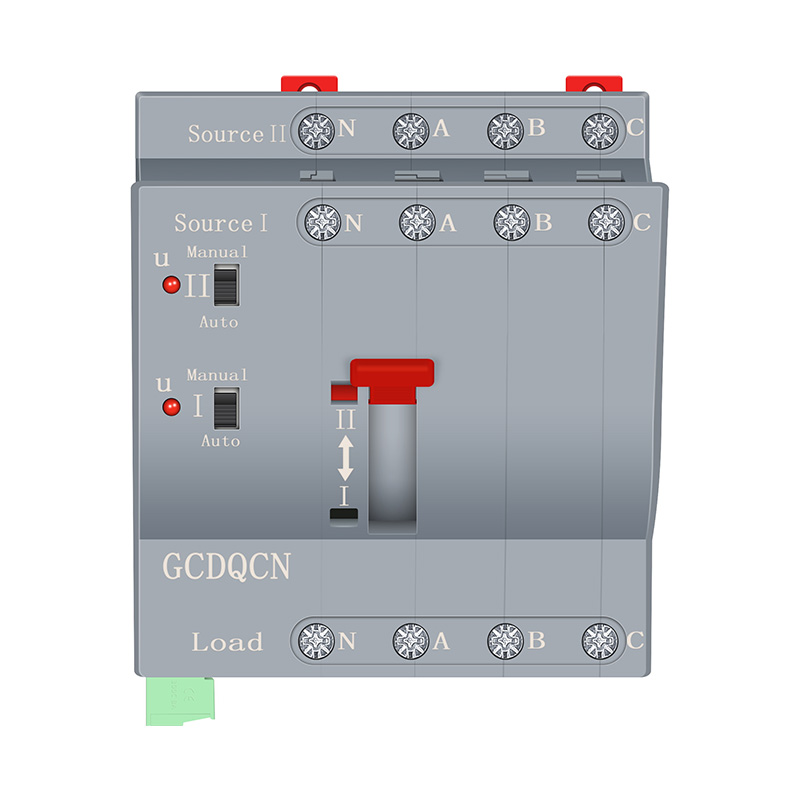
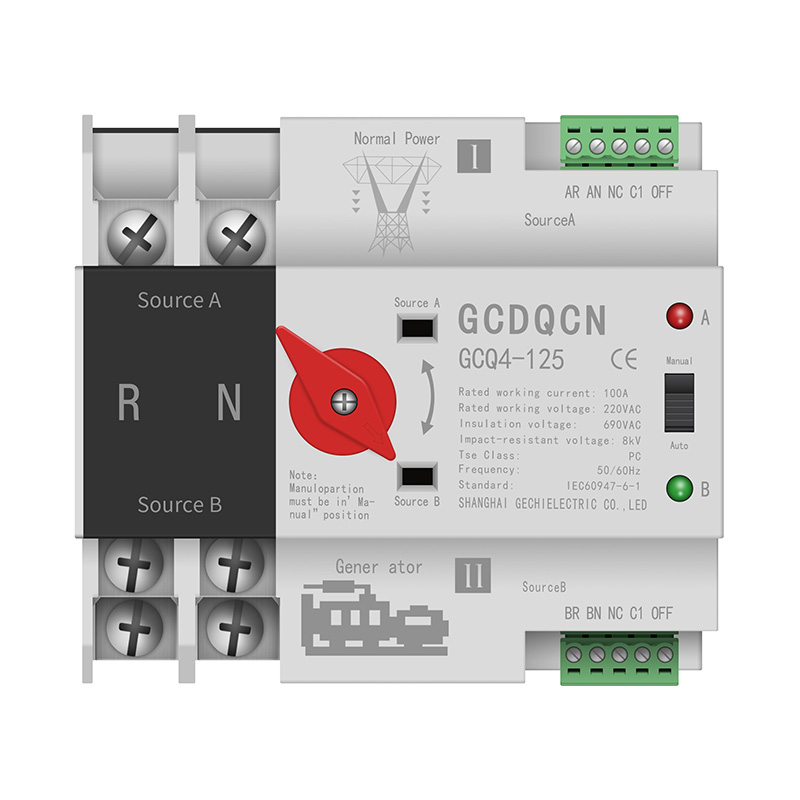
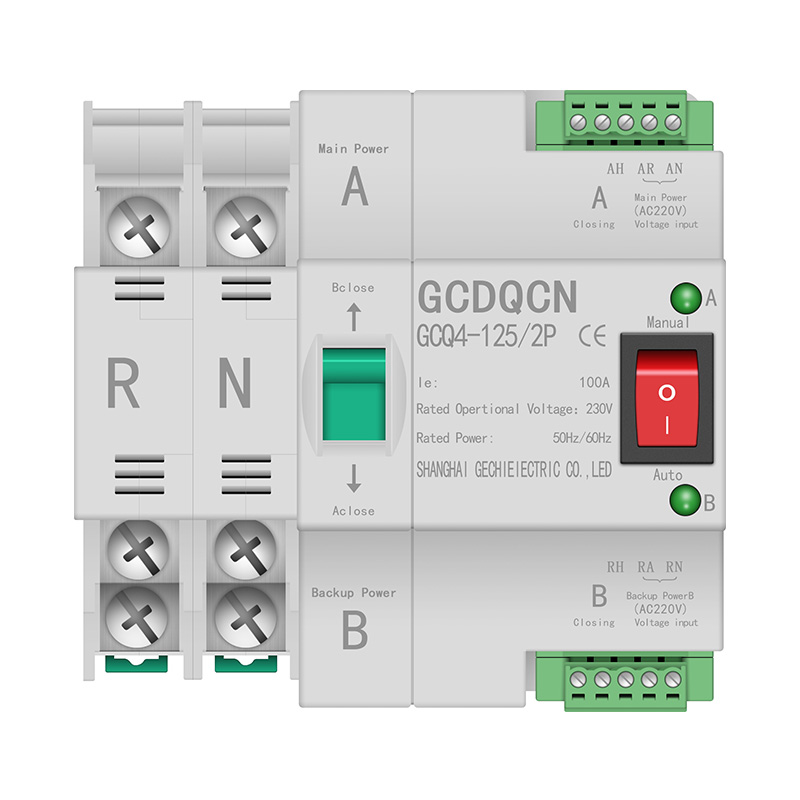
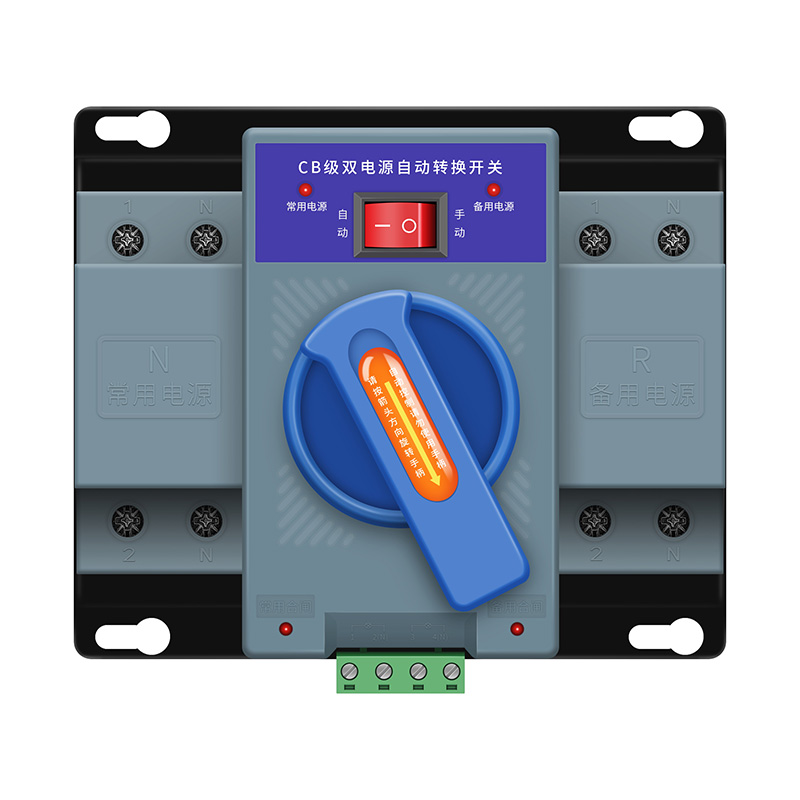
Integration with Din Rail Automatic Transfer Switch
In modern fire pump systems, the mechanical emergency start device can be complemented by a DIN rail automatic transfer switch. This integration allows for a seamless transition between the normal power supply and backup power in case of grid failure. While the mechanical start acts as a manual emergency measure, the DIN rail automatic transfer switch ensures that the fire pump can still operate under automated power transfer conditions when the electrical system is functional. The combination provides redundancy and flexibility, reducing downtime and maintaining the reliability of critical fire-fighting operations.
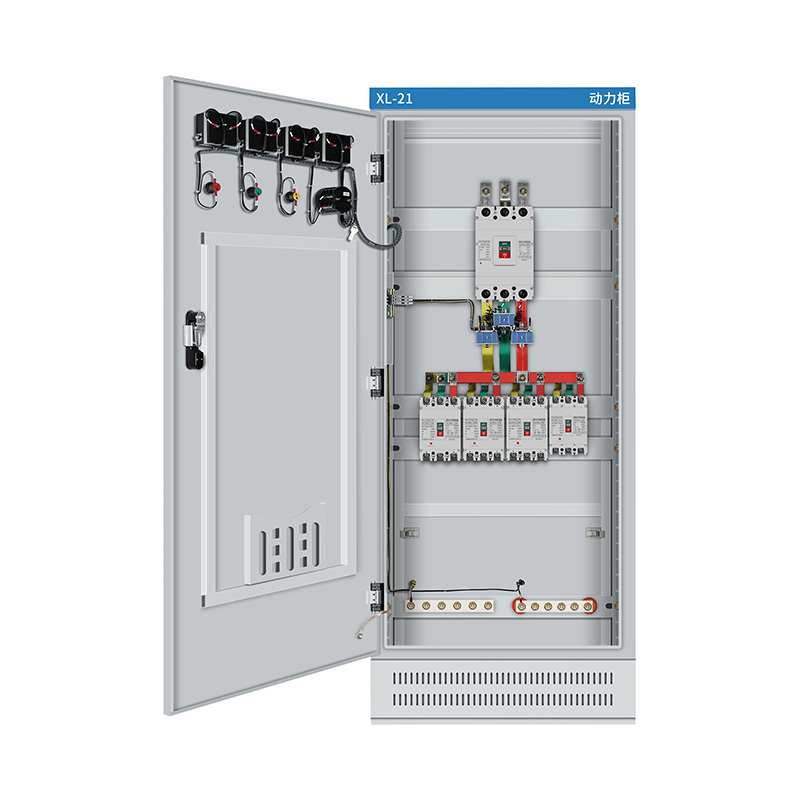
Compatibility with Electrical Switch Cabinet
The mechanical emergency start device is designed to be compatible with standard electrical switch cabinets, allowing it to be easily installed within existing fire pump control panels. The switch cabinet provides organized housing for the main power circuits, contactors, and mechanical interlocking components. Proper integration ensures that the mechanical device does not interfere with normal electrical operations while remaining accessible for manual operation when needed. This setup also allows operators to inspect, maintain, and operate the device safely within the structured environment of the switch cabinet.
Advantages in Emergency Situations
By relying solely on mechanical principles, the emergency start device can initiate pump operation even when all electrical controls fail. Its placement inside an electrical switch cabinet ensures that it is protected from environmental factors such as dust or moisture while remaining immediately available. The system is especially useful in high-rise buildings, industrial facilities, and critical infrastructure, where fire pumps must operate reliably under all circumstances.
Operational Considerations
While the device provides a direct and full-pressure start, operators must be trained to use the handle correctly. Manual stopping is required after operation, and the integration with the DIN rail automatic transfer switch should be checked regularly to confirm coordinated performance. Routine inspections within the electrical switch cabinet help identify wear in mechanical contacts or transmission handles, ensuring continued reliability in emergency scenarios.
HOT PRODUCTS
interested?
Contact us!
Xinguang Industrial Zone, Liushi Town, Yueqing, Wenzhou, Zhejiang, China.
+86-0577-62620730
 English
 русский
 عربى
عربى
 Türk
Türk
 ไทย
ไทย