/ Contact Us
Zhejiang Gechi Electric Co., Ltd.
Xinguang Industrial Zone, Liushi Town, Yueqing, Wenzhou, Zhejiang, China.
+86-0577-62620730
/ Contact Us
Zhejiang Gechi Electric Co., Ltd.
Xinguang Industrial Zone, Liushi Town, Yueqing, Wenzhou, Zhejiang, China.
+86-0577-62620730




2025-10-10
Across modern residential, commercial, and industrial environments, Electrical Distribution Boxes and the Distribution Box Set play a vital role in managing and protecting electrical systems. They function as central control units where electricity from the main supply is divided into subsidiary circuits, safeguarding both equipment and users. However, despite their importance, many systems face issues that can compromise efficiency and safety over time.
Environmental exposure remains another critical concern, especially for boxes installed in basements, workshops, or outdoor areas. When moisture enters the enclosure, it can cause corrosion of metal components, short circuits, and insulation breakdown. Similarly, dust accumulation may obstruct ventilation and cause contact malfunction.
To mitigate these risks, selecting enclosures with an appropriate protection rating (such as IP20, IP44, or higher) is important. For example, when used indoors, basic dust resistance is usually sufficient, but outdoor installations may require higher levels of sealing. Modern designs often include gaskets, drip-proof vents, and corrosion-resistant materials to extend service life and maintain safe operation.
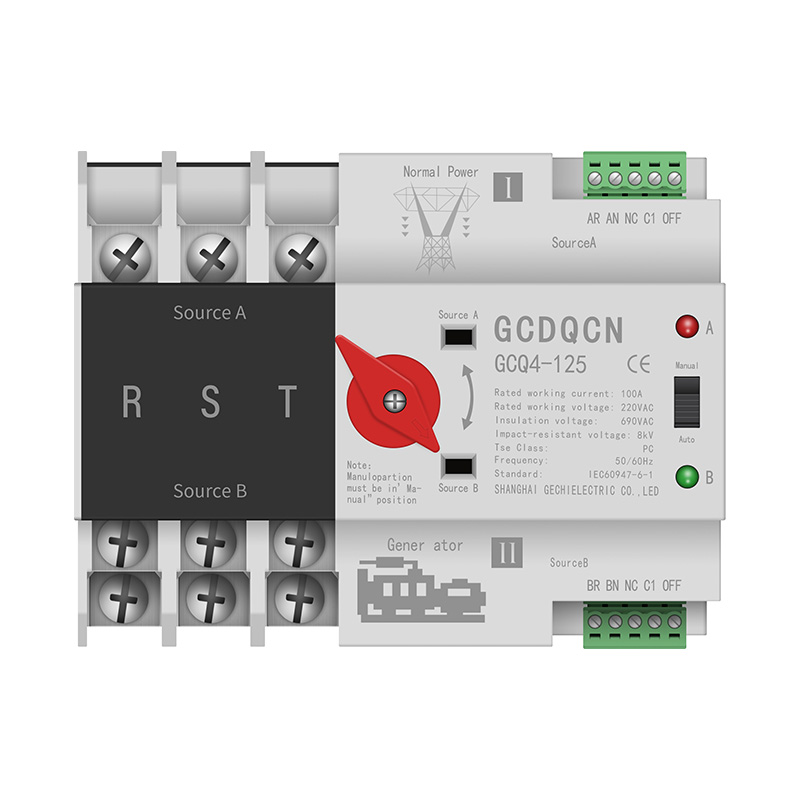
Another recurring issue is the use of incorrect circuit breakers or fuses. Each distribution circuit should be designed based on load characteristics and wiring capacity. Underrated breakers may trip unnecessarily, while overrated ones might fail to protect against overloads.
A well-configured Distribution Box Set provides clear labeling, pre-tested components, and logical wiring layouts to support balanced load allocation. During installation, careful planning of each branch circuit and verification of total current demand can prevent future malfunctions.
Circuit breakers, contactors, and busbars gradually wear due to repeated switching and continuous current flow. Additionally, heat and humidity can accelerate insulation aging, making cables brittle or cracked. These deteriorations not only reduce performance but also increase the risk of short circuits and electric shocks.
Routine maintenance schedules should include thermal scanning, insulation resistance testing, and timely replacement of worn-out parts. Modern systems that utilize modular Distribution Box Sets allow easier replacement of individual parts without requiring full panel disassembly, reducing downtime during upgrades or repairs.
Incorrect installation practices are often the source of persistent electrical problems. Errors such as reversed polarity, missing grounding, or improper cable routing can cause intermittent faults and pose safety hazards. Additionally, poor labeling makes troubleshooting difficult, increasing the time and cost of maintenance.
To address these challenges, using distribution boxes with clear terminal markings—such as L1, L2, N, and GND—greatly helps during installation. For large-scale applications, using color-coded conductors and printed circuit labels simplifies future expansions or modifications.
As systems expand, additional circuits are often added to existing boxes. Without proper planning, this can result in overcrowded wiring, insufficient spacing for heat dissipation, and difficulty in accessing terminals. An overloaded enclosure not only complicates maintenance but also increases the chance of accidental contact and short circuits.
Choosing the right box size from the beginning prevents such problems. Modular Distribution Box Sets are particularly advantageous here, as they offer expandable configurations that allow users to accommodate more circuits without compromising accessibility. Proper cable management accessories, such as clips and channels, also contribute to organized and secure installations.
HOT PRODUCTS
interested?
Contact us!
Xinguang Industrial Zone, Liushi Town, Yueqing, Wenzhou, Zhejiang, China.
+86-0577-62620730
 English
 русский
 عربى
عربى
 Türk
Türk
 ไทย
ไทย