/ Contact Us
Zhejiang Gechi Electric Co., Ltd.
Xinguang Industrial Zone, Liushi Town, Yueqing, Wenzhou, Zhejiang, China.
+86-0577-62620730
/ Contact Us
Zhejiang Gechi Electric Co., Ltd.
Xinguang Industrial Zone, Liushi Town, Yueqing, Wenzhou, Zhejiang, China.
+86-0577-62620730





2026-07-03
As global infrastructure, industrial automation, and building electrification continue to expand, electrical safety and system reliability have become top priorities for engineers and procurement teams. A Distribution Cabinet is now widely viewed as the core hub of low-voltage power management, responsible for safe energy routing, circuit protection, and load balancing across complex systems. Recent industry discussions and search trends show growing interest in modular electrical distribution systems, pre-assembled power distribution units, and IP-rated control cabinets for industrial environments. At the same time, the Distribution Box Set is gaining attention as a flexible, ready-to-install solution that simplifies field installation while improving consistency across projects. Buyers are increasingly focused on installation efficiency, thermal management, safety compliance, and long-term maintainability rather than basic enclosure specifications.
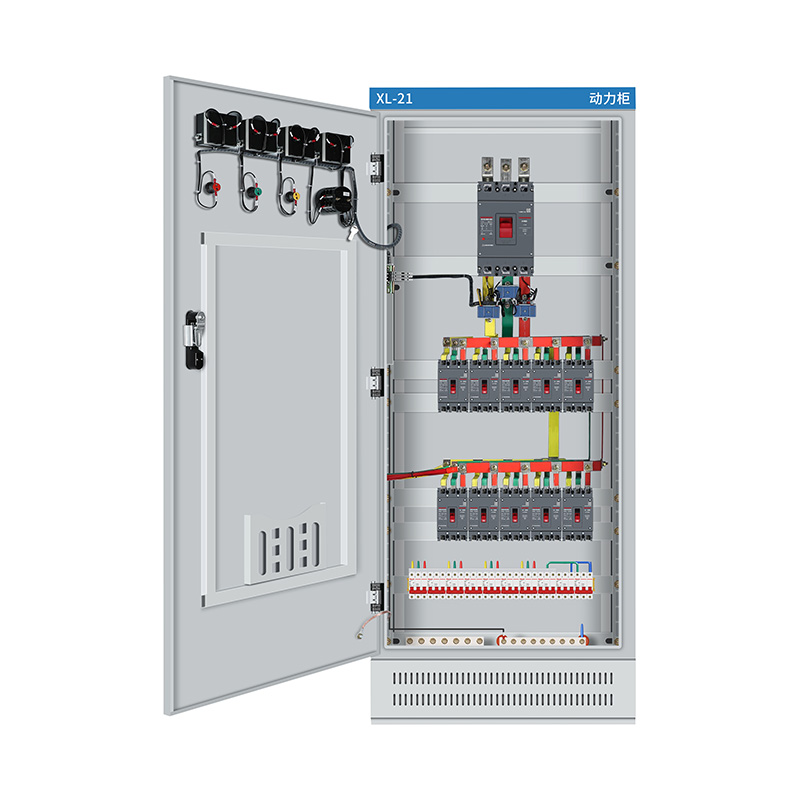
One of the strongest market trends is the shift toward pre-configured and modular electrical solutions. Contractors and system integrators are under pressure to reduce installation time on-site while maintaining strict compliance with electrical safety standards.
Instead of assembling components individually, buyers now prefer integrated systems that arrive ready for wiring connection and commissioning. This reduces human error during installation and ensures consistent internal layout across multiple project sites.
Electrical distribution systems must now meet stricter international safety regulations, especially in commercial buildings, industrial plants, and renewable energy projects. Engineers are no longer evaluating products solely based on cost—they are reviewing compliance documentation before procurement decisions.
Key evaluation criteria include:
These requirements are essential for ensuring safe long-term operation in high-load environments.
As electrical loads increase in modern buildings and factories, heat accumulation inside distribution systems has become a major engineering concern. Poor thermal design can reduce component lifespan and increase failure risks.
Manufacturers are focusing on:
These improvements help ensure stable performance in both indoor and semi-outdoor installations.
Modular design is reshaping how electrical systems are planned and installed. Instead of fixed internal structures, modern distribution systems allow engineers to configure circuits based on project requirements.
This flexibility supports:
For large-scale infrastructure projects, modularity significantly improves project efficiency and reduces engineering complexity.
Labor cost optimization has become a key concern for contractors worldwide. Electrical installation time directly affects project timelines, making ease of installation a critical purchasing factor.
Modern distribution systems are designed with:
These design improvements reduce installation time while lowering the risk of wiring errors during commissioning.
Electrical distribution systems are no longer limited to traditional construction projects. Their use has expanded significantly across multiple sectors due to increased electrification and automation.
Common application areas include:
Each application requires different load capacities, protection levels, and structural configurations.
Beyond product structure, buyers are increasingly evaluating supplier capability in terms of engineering support, documentation, and production consistency. Large-scale projects require uniform performance across all delivered units.
Manufacturers are often expected to provide:
This level of support helps ensure smooth integration into complex electrical systems.
The role of suppliers is evolving from basic enclosure manufacturing to full system-level solution providers. Buyers now expect distribution systems that are ready for integration, scalable for future expansion, and compliant with international standards from the outset.
As global electrical infrastructure continues to advance toward smarter, safer, and more modular designs, demand for reliable Distribution Cabinet solutions will continue to grow, especially in projects requiring stable power management, efficient installation, and long-term operational reliability. At the same time, the Distribution Box Set is becoming an increasingly preferred choice for engineers seeking practical, pre-assembled electrical distribution solutions for modern power systems.
HOT PRODUCTS
interested?
Contact us!
Xinguang Industrial Zone, Liushi Town, Yueqing, Wenzhou, Zhejiang, China.
+86-0577-62620730
 English
 русский
 عربى
عربى
 Türk
Türk
 ไทย
ไทย