/ Contact Us
Zhejiang Gechi Electric Co., Ltd.
Xinguang Industrial Zone, Liushi Town, Yueqing, Wenzhou, Zhejiang, China.
+86-0577-62620730
/ Contact Us
Zhejiang Gechi Electric Co., Ltd.
Xinguang Industrial Zone, Liushi Town, Yueqing, Wenzhou, Zhejiang, China.
+86-0577-62620730





2026-02-20
Efficient power distribution is a critical aspect of modern industrial and commercial operations. Distribution Box Sets and Electrical Distribution Cabinets are central to organizing circuits, providing protection, and facilitating easier system management. Modular design has become a widely considered approach in these systems, offering flexibility and convenience for installation, maintenance, and future upgrades.
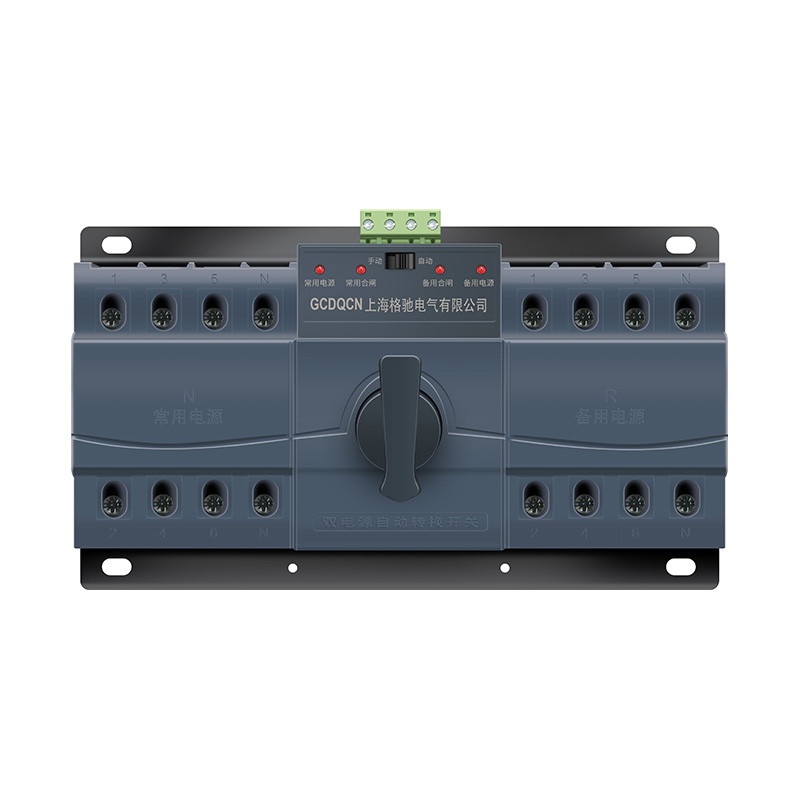
Modular Distribution Box Sets allow electrical components to be arranged in separate, standardized sections. This design approach enables modifications or expansions without significant changes to the overall enclosure. Industrial facilities and commercial buildings often experience changes in load requirements or circuit configurations, and modular cabinets provide a straightforward method to accommodate these adjustments. By organizing breakers, switches, and protective devices in defined modules, technicians can quickly identify and access individual sections, reducing the time and effort required for modifications.
Electrical Distribution Cabinets with modular construction often streamline the installation process. Pre-assembled sections or plug-in modules can be positioned and connected without complex adjustments to the main structure. This approach simplifies wiring and reduces the risk of errors during setup. Additionally, standardized modules allow for consistent spacing and alignment of components, which supports safer installation practices and clearer organization within the cabinet.
Routine inspection and maintenance are easier in modular Distribution Box Sets. Components such as circuit breakers, residual current devices, surge protective devices, and busbars are arranged in a way that permits access without disassembling unrelated sections. Maintenance personnel can isolate specific modules for testing or replacement while leaving other circuits in service. This reduces operational disruption and allows for more precise monitoring of individual elements, supporting continued orderly management of electrical systems.
Many modern Electrical Distribution Cabinets incorporate monitoring and control tools to track system performance. Modular designs facilitate the addition of meters, signal indicators, or interface modules without major restructuring. Technicians can attach monitoring devices to specific modules or integrate communication interfaces for data collection on current, voltage, and energy usage. This flexibility supports clearer oversight of electrical performance and helps identify areas that may require attention or adjustment.
Safety is a primary concern in any power distribution system. Modular Distribution Box Sets provide consistent spacing between components, reducing the risk of accidental contact and improving airflow around heat-generating devices. Clear labeling and organized layout in modular cabinets allow technicians to navigate the system efficiently. Busbars, wiring paths, and protective devices are placed systematically, helping maintain separation of phases and grounding connections. This structured approach also aids in identifying and isolating circuits during troubleshooting or fault conditions.
The modular concept supports gradual system expansion without the need to replace the entire cabinet. As electrical demands change, additional modules can be added to accommodate new circuits or upgraded protective devices. Modular Distribution Box Sets provide the flexibility to scale capacity in a controlled and organized manner, preserving clarity and function throughout the electrical system.
Modular Electrical Distribution Cabinets are suitable for a variety of industrial and commercial environments, including manufacturing plants, workshops, data centers, and office buildings. The modular approach facilitates adaptation to diverse layouts and load types. It also simplifies replication of cabinet configurations across different locations, supporting standardization of installation and maintenance practices in larger facilities. Modular designs are particularly useful when multiple cabinets are installed together, as they allow uniform alignment and simplified connectivity between units.
Even with modular design, regular inspection and testing remain important. Checking connections, examining breakers and switches, and verifying the operation of protective devices ensures the cabinet continues to operate in an organized and safe manner. Modular layouts assist these processes by clearly separating functional sections, allowing technicians to address specific areas without affecting unrelated circuits.
HOT PRODUCTS
interested?
Contact us!
Xinguang Industrial Zone, Liushi Town, Yueqing, Wenzhou, Zhejiang, China.
+86-0577-62620730
 English
 русский
 عربى
عربى
 Türk
Türk
 ไทย
ไทย