/ Contact Us
Zhejiang Gechi Electric Co., Ltd.
Xinguang Industrial Zone, Liushi Town, Yueqing, Wenzhou, Zhejiang, China.
+86-0577-62620730
/ Contact Us
Zhejiang Gechi Electric Co., Ltd.
Xinguang Industrial Zone, Liushi Town, Yueqing, Wenzhou, Zhejiang, China.
+86-0577-62620730




2025-11-28
Managing complex electrical networks in industrial and commercial facilities requires not only proper distribution of power but also continuous oversight. A Distribution Cabinet Set or Distribution Cabinet serves as the central point for organizing circuits and integrating safety devices, and the addition of monitoring tools inside the cabinet can significantly enhance operational control and energy management. These tools provide actionable insights into the performance of electrical systems, helping operators maintain consistent and stable power flow while addressing potential issues promptly.
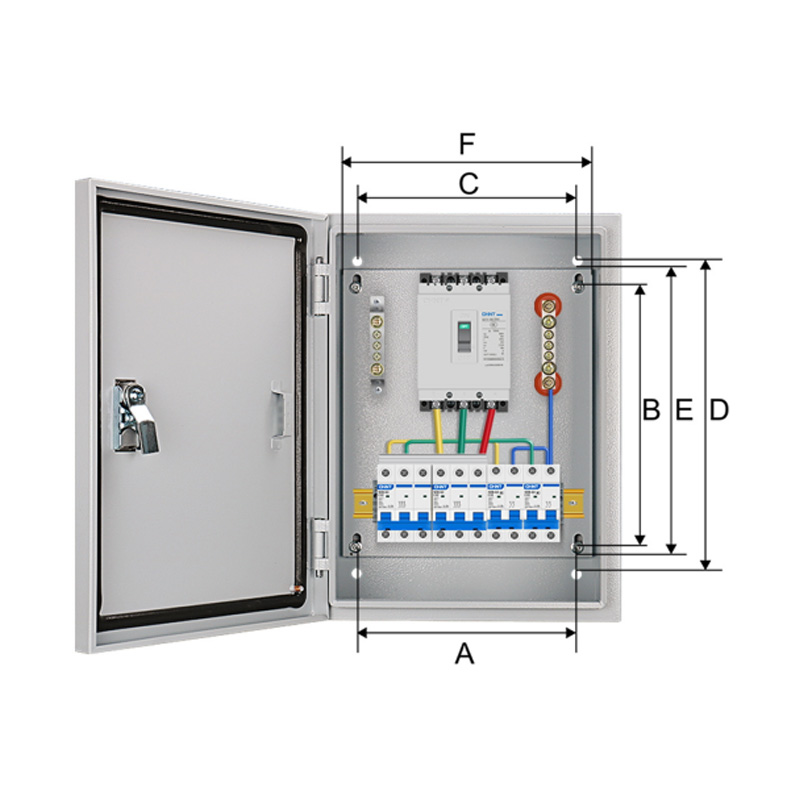
Monitoring tools inside a distribution cabinet provide real-time information on current, voltage, and load distribution across circuits. This visibility allows facility managers to detect imbalances, track energy usage patterns, and adjust operational schedules accordingly. By identifying circuits that draw higher energy than expected or detecting unusual fluctuations, operators can implement corrective measures that support a balanced and efficient distribution of power without interrupting overall facility operations.
Electrical faults, overcurrent situations, or temperature anomalies can cause equipment damage or safety hazards. Integrated monitoring devices enable early detection of these issues before they escalate into more serious problems. For example, sensors that track heat generation or current spikes can trigger alerts, allowing maintenance personnel to intervene quickly. This proactive approach reduces the likelihood of unexpected shutdowns, ensures consistent power delivery, and helps maintain a safe working environment.
Monitoring tools facilitate preventive maintenance by providing historical and trend data. Facility managers can review performance logs to identify gradual changes in energy consumption or recurring load patterns. These insights help schedule maintenance during planned downtime rather than responding reactively to equipment failure. The ability to anticipate wear and adjust maintenance routines contributes to stable operation and reduces unplanned interruptions that can disrupt production or increase energy losses.
A distribution cabinet equipped with monitoring tools can serve as a bridge between the electrical network and broader energy management systems. Data collected from the cabinet can feed into building management platforms or industrial control systems, supporting centralized oversight of energy usage, automated adjustments, and remote monitoring. By providing structured and accessible data, monitoring tools help managers make informed decisions regarding load distribution, energy allocation, and operational scheduling.
Distribution cabinets with monitoring capabilities are suitable for a variety of environments, including manufacturing plants, commercial buildings, data centers, and utility facilities. They provide practical benefits such as real-time energy tracking, fault detection, and enhanced operational control, all within a compact, organized enclosure. The combination of protective devices, structured cabling, and integrated monitoring tools helps ensure that energy flows smoothly and safely while allowing operators to respond efficiently to changing conditions.
By providing real-time visibility, early detection of potential faults, support for preventive maintenance, and integration with energy management systems, monitoring tools inside a Distribution Cabinet Set or Distribution Cabinet play a vital role in maintaining consistent, controlled, and efficient electrical operation. Their presence enables operators to manage complex networks with greater confidence while ensuring safety, stability, and practical oversight of energy consumption.
HOT PRODUCTS
interested?
Contact us!
Xinguang Industrial Zone, Liushi Town, Yueqing, Wenzhou, Zhejiang, China.
+86-0577-62620730
 English
 русский
 عربى
عربى
 Türk
Türk
 ไทย
ไทย