/ Contact Us
Zhejiang Gechi Electric Co., Ltd.
Xinguang Industrial Zone, Liushi Town, Yueqing, Wenzhou, Zhejiang, China.
+86-0577-62620730
/ Contact Us
Zhejiang Gechi Electric Co., Ltd.
Xinguang Industrial Zone, Liushi Town, Yueqing, Wenzhou, Zhejiang, China.
+86-0577-62620730





2026-05-29
Distribution Cabinet and Electrical Distribution Cabinets are increasingly used in modern power systems where stable energy distribution and operational safety are required in industrial environments. As production systems become more connected and equipment loads more complex, the role of structured power distribution has gradually shifted toward more controlled and segmented management.
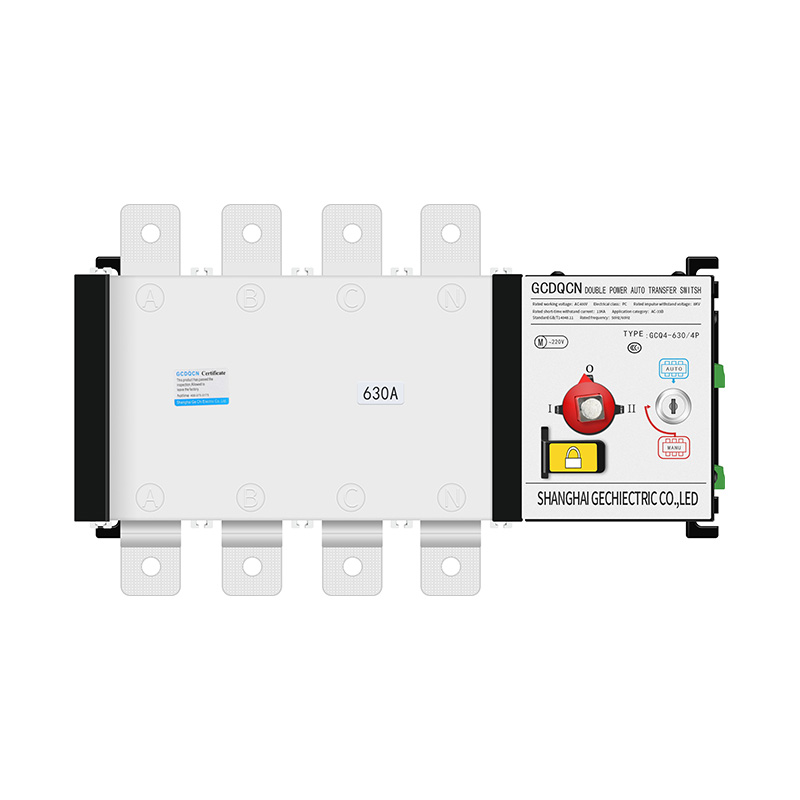
Industrial facilities today rarely operate with simple power consumption patterns. Multiple machines often run simultaneously, including motors, automation lines, heating systems, and control units. This creates fluctuating load demands that require careful balancing. Without structured distribution, electrical faults such as overload, short circuit, or phase imbalance can spread across systems and affect wider operations.
Electrical Distribution Cabinets are designed to divide and organize electrical supply into manageable circuits, but in many older setups, distribution points are still concentrated or loosely arranged. This increases the difficulty of maintenance and makes fault tracing less efficient during downtime situations. In addition, space constraints in modern factories often cause dense wiring layouts, which further complicate inspection and routine servicing.
Recent developments in Distribution Cabinet configurations focus on clearer circuit segmentation, improved internal layout, and more standardized component arrangement. Instead of relying on irregular wiring paths, modern systems emphasize modular structure, allowing individual sections to be accessed or replaced without affecting the entire cabinet.
A typical Electrical Distribution Cabinet now integrates multiple protection and control components in a more organized framework:
|
Component |
Function in System |
|
Circuit Breakers |
Isolate overload or short circuit conditions |
|
Busbars |
Distribute power across multiple circuits |
|
Surge Protection Devices |
Reduce impact of voltage fluctuations |
|
Terminal Blocks |
Organize outgoing and incoming connections |
|
Monitoring Modules |
Provide real-time electrical data |
This arrangement reduces confusion during inspection and supports more consistent maintenance procedures. Wiring routes are also designed with clearer separation between control and power lines, which helps reduce electromagnetic interference in sensitive systems.
In addition, ventilation structures and heat dissipation layouts are being adjusted to match higher load densities. Rather than relying solely on external airflow, internal channel design allows heat to move away from high-load components more evenly.
Distribution Cabinet systems are used across a wide range of environments where continuous power delivery is required. In manufacturing plants, they connect production lines, robotic systems, and conveyor equipment. In energy facilities, they distribute electricity across substations and auxiliary systems. In commercial buildings, they manage lighting, HVAC systems, and emergency power circuits.
Electrical Distribution Cabinets are also commonly installed in infrastructure projects such as transportation hubs, water treatment stations, and data processing centers. Each of these environments has different load characteristics, but the basic requirement remains similar: stable allocation of electricity across multiple branches without frequent interruption.
In automated production lines, cabinets are often placed close to machine clusters to shorten wiring distance and reduce transmission loss. In building systems, they are typically centralized in electrical rooms to simplify access control and safety management.
Field observations from industrial installations show that structured distribution systems can reduce the time required for fault localization. In one mid-scale manufacturing setup, switching from a centralized wiring arrangement to segmented Electrical Distribution Cabinets reduced inspection time during maintenance cycles by approximately 25–35%, based on internal maintenance logs.
Another observed case involved a packaging facility where repeated minor overload events occurred during peak production hours. After reorganizing load distribution through a redesigned cabinet layout, electrical interruptions became easier to isolate to specific circuits rather than affecting entire production sections. This allowed maintenance teams to address individual lines without shutting down the full system.
These examples do not indicate performance guarantees but illustrate how structural organization can influence operational workflow and response time during electrical events.
HOT PRODUCTS
interested?
Contact us!
Xinguang Industrial Zone, Liushi Town, Yueqing, Wenzhou, Zhejiang, China.
+86-0577-62620730
 English
 русский
 عربى
عربى
 Türk
Türk
 ไทย
ไทย