/ Contact Us
Zhejiang Gechi Electric Co., Ltd.
Xinguang Industrial Zone, Liushi Town, Yueqing, Wenzhou, Zhejiang, China.
+86-0577-62620730
/ Contact Us
Zhejiang Gechi Electric Co., Ltd.
Xinguang Industrial Zone, Liushi Town, Yueqing, Wenzhou, Zhejiang, China.
+86-0577-62620730





2026-05-22
Modern industrial power systems depend heavily on stable energy routing, and Distribution Cabinet setups are increasingly integrated with Electrical Distribution Cabinets to manage load distribution across complex facilities. Distribution Cabinet Introduces Electrical Distribution Cabinets in a way that reflects how modern electrical infrastructure is being organized to support varied industrial requirements without unnecessary complexity in operation.
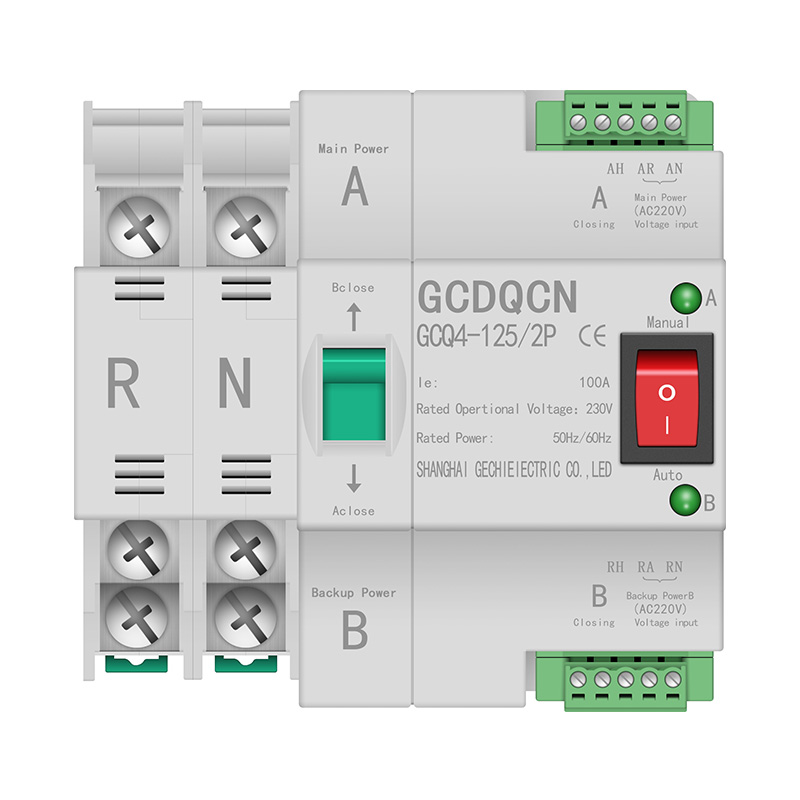
As manufacturing environments and automated facilities expand, electrical demand becomes more segmented and variable. Traditional wiring layouts often struggle with uneven load distribution, longer response times during fault isolation, and limited flexibility when systems are expanded or reconfigured. In many plants, electrical circuits were once arranged in a fixed structure, making it difficult to adjust power routes when production lines changed or when new equipment was added.
Electrical distribution systems today are expected to support not only power delivery but also monitoring, segmentation, and safety coordination. Without a structured distribution layer, it becomes harder to identify overload points or isolate faulty circuits quickly. This situation can result in unnecessary downtime during maintenance or troubleshooting. The growing complexity of industrial operations has therefore increased the demand for more organized distribution frameworks.
Recent developments in Distribution Cabinet configurations focus on modular arrangement and clearer circuit segmentation. Electrical Distribution Cabinets are designed to separate incoming and outgoing power lines in a more organized layout, making internal wiring easier to manage and inspect. Instead of concentrating all functions into a single undivided structure, modern designs divide circuits into functional zones, which helps technicians trace electrical flow more efficiently during inspection or maintenance work.
Several technical adjustments are commonly introduced in updated cabinet systems:
These changes are not aimed at increasing complexity but at improving clarity in power routing. By organizing circuits into structured layers, the system allows maintenance teams to work on specific sections without interrupting the entire electrical network. This approach also supports gradual upgrades, where additional circuits can be added without redesigning the full system.
Electrical Distribution Cabinets are applied in a wide range of environments where stable and segmented power delivery is required. Their use is not limited to large-scale factories but also extends to commercial buildings and infrastructure projects.
In manufacturing plants, distribution cabinets manage separate production lines, ensuring that one operational area does not overload another. In automated warehouse systems, they support conveyor belts, sorting machines, and robotic units that operate simultaneously but require different power loads. In building infrastructure, they are used to separate lighting systems, HVAC units, and emergency circuits into independent control zones.
A simplified view of application usage includes:
Each scenario benefits from structured distribution because it reduces the dependency on centralized power routing. Instead, power is distributed through defined pathways, allowing easier isolation of individual sections when needed.
Field implementations of structured Electrical Distribution Cabinets show measurable differences in maintenance and operational handling compared with older fixed wiring systems. Maintenance logs from industrial environments indicate that fault tracing time can be reduced when circuits are clearly segmented and labeled within the cabinet structure.
For example, in a mid-sized manufacturing facility operating multiple production lines, switching from a traditional distribution layout to a modular cabinet system reduced electrical troubleshooting steps during scheduled maintenance. Technicians were able to isolate affected circuits more directly, avoiding the need to shut down unrelated production zones.
Operational observations include:
These results are generally associated with improved organization rather than changes in energy output or power capacity. The main difference lies in how the electrical system is structured and accessed, rather than how much power it generates or consumes.
A Distribution Cabinet is used to organize and manage electrical power flow across different circuits, helping separate and route electricity to various equipment or areas within a facility.
Electrical Distribution Cabinets usually include more structured segmentation, clearer circuit organization, and modular expansion options compared with basic power panels that often have simpler layouts.
Many modern cabinet systems are designed with modular components, allowing additional circuits or breakers to be added without replacing the entire structure.
They are commonly used in factories, commercial buildings, automated systems, and infrastructure projects where multiple electrical loads need to be managed separately.
HOT PRODUCTS
interested?
Contact us!
Xinguang Industrial Zone, Liushi Town, Yueqing, Wenzhou, Zhejiang, China.
+86-0577-62620730
 English
 русский
 عربى
عربى
 Türk
Türk
 ไทย
ไทย